
What Italy Taught Me About Timeless Design
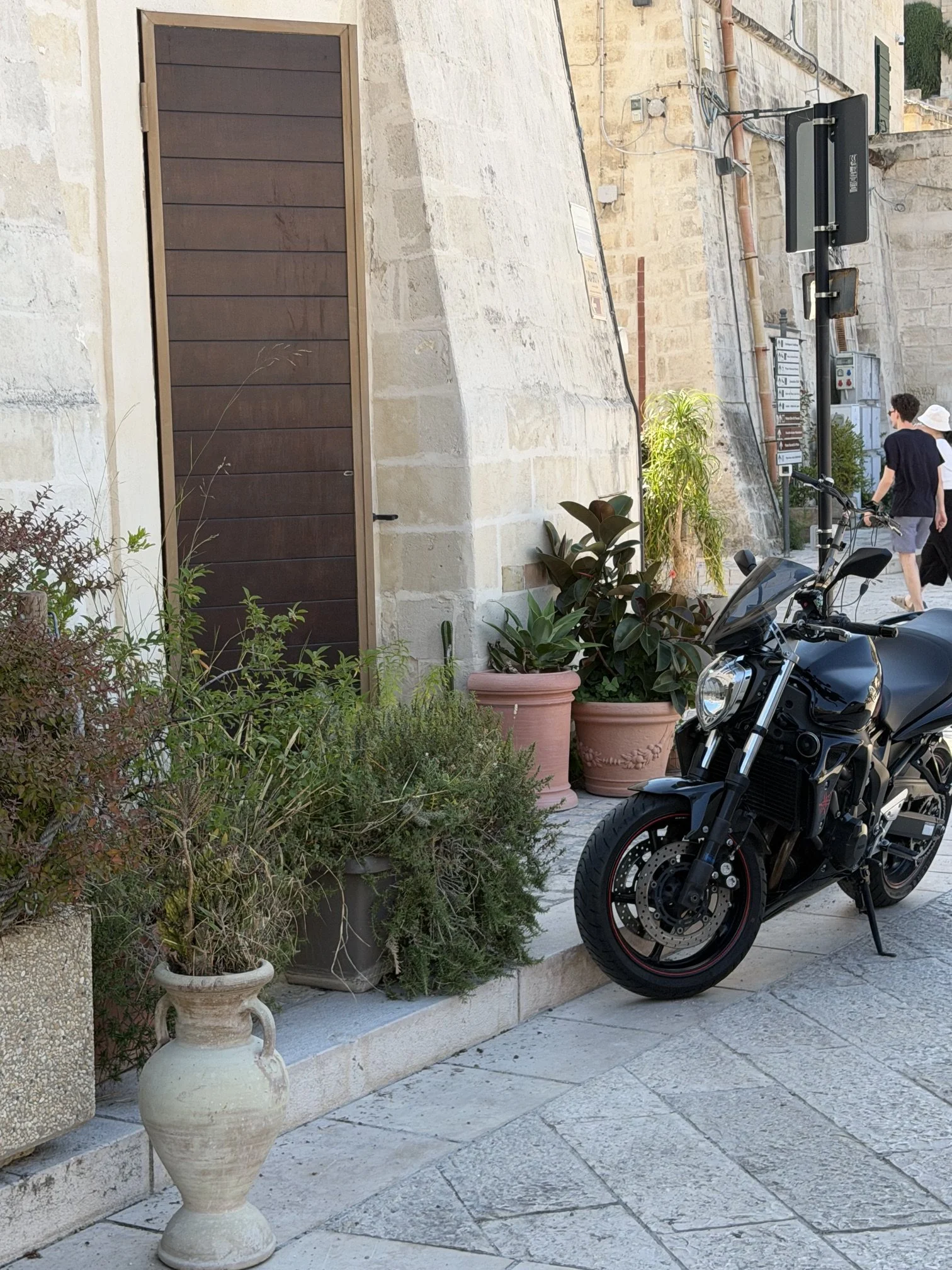
My recent trip to the beautiful region of Puglia, Italy this July showed me how past history and present day design reflect each other.
Like many fellow travellers, we took day trips exploring small towns and historic sites stopping to take pictures, drink Aperol Spritzes and enjoy the landscapes around us. And yes, it was HOT!
The Timeless Beauty of Herringbone
Wherever we went, the earthy, neutral textures, packed earth and original stone slab flooring struck me most. These date back thousands of years and are satiny smooth from so many years of use. As a designer, I found this fascinating.
When we spent some time in Matera, I was particularly struck by some areas featuring flooring in herringbone patterns.
Check my instagram for a quick video of them >>
I love herringbone patterns in particular (my kitchen backsplash attests to that!) and I was curious to learn more about them.
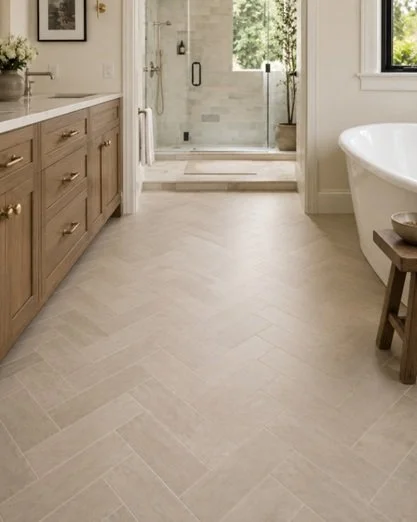
Here are some interesting facts.
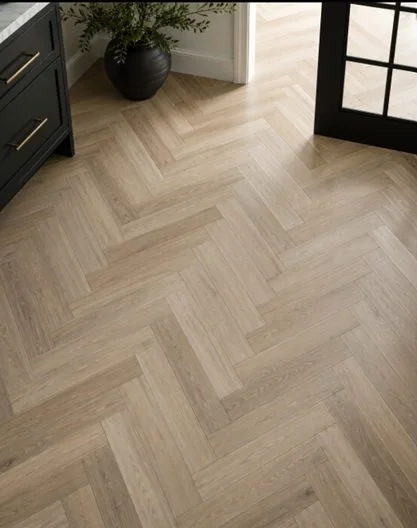
The classic herringbone pattern in Italy originated from ancient Roman road-paving techniques rather than wood parquet. Matera herringbone flooring typically refers to modern Italian porcelain tiles designed to mimic the natural limestone textures of the Apulia and Basilicata regions.
Romans laid bricks in a V-shaped zigzag resembling a fish skeleton to handle heavy cart and foot weight. The motif shifted from roads to medieval and Renaissance structures, villas and cathedral floors.
Design Inspiration from the Streets of Southern Italy
Today, manufacturers use the name "Matera" to evoke the warm aesthetic of Southern Italian stone architectures in geometric herringbone layouts.
While I was struck by the beauty of those patterns, Matera is interestingly known for its carved cave systems dating back thousands of years. But that's another story!
During the '90s, we commonly used those same tumbled stone slabs in many of our residential projects. And many of my clients wanting a refresh of their homes, still want to retain them. Adding cooler tones to the stone's warm hue provides a wonderful refresh. It also emphasizes to me how timeless and beautiful these stones are today.